


Overview
Last month I ran a small experiment on LinkedIn to test something I’ve been calling a “Democracy of Ideas.”
The prompt was simple:
Which value should technology reflect first?
Curiosity · Compassion · Integrity · Productivity
It looks like a normal poll. But under the hood, I was trying to see if we could use a basic social-media poll as a prototype for something bigger: a way to surface the values people actually care about, not just the ones the an AI interface nudges us toward.
This Field Note #1 is a short recap of what we were hoping to learn, what actually happened, and where we go next.
What we were testing
Three things, really:
Values vs. defaults
What values are embeded as defaults in ChatGPT greetings, and how does that compare to what We the People would want? ChatGPT greets us with prompts like “What are you working on?” and “Where should we begin?” That quietly centers productivity and efficiency. I wanted to ask:
If these tools shape how we think, what values do we actually want them to reflect first?
Polls as a doorway, not a destination
Could we use a simple four-option poll to pull people into a deeper conversation in the comments? A poll is a blunt instrument; the comments are where nuance lives.A tiny version of the Idea Commons
We’re habituated to the idea of democracy being a choice between person A or person B. A narrow frame that gives us the illusion of freedom to choose. But whoever frames the options has significant power over the potential outcome of our vote. Instead, could we treat “likes/hearts” on comments as a second layer of voting? Poll for a quick signal, then let people propose and upvote better ideas in the comments. Early prototype of a Democracy of Ideas, and crowdsourcing collective wisdom.
What Sparked this Inquiry?
It was another average afternoon in mid October, mild weather, our dog Luka sitting on the couch beside me. I was jumping into a conversation with ChatGPT (I don’t remember what it was even about, exploring and reflecting on some ideas). I noticed something subtle that hadn’t really stood out to me before.
The words…
“What are you working on?”
… like the warm greeting from a smiling acquaintance, seemingly friendly.
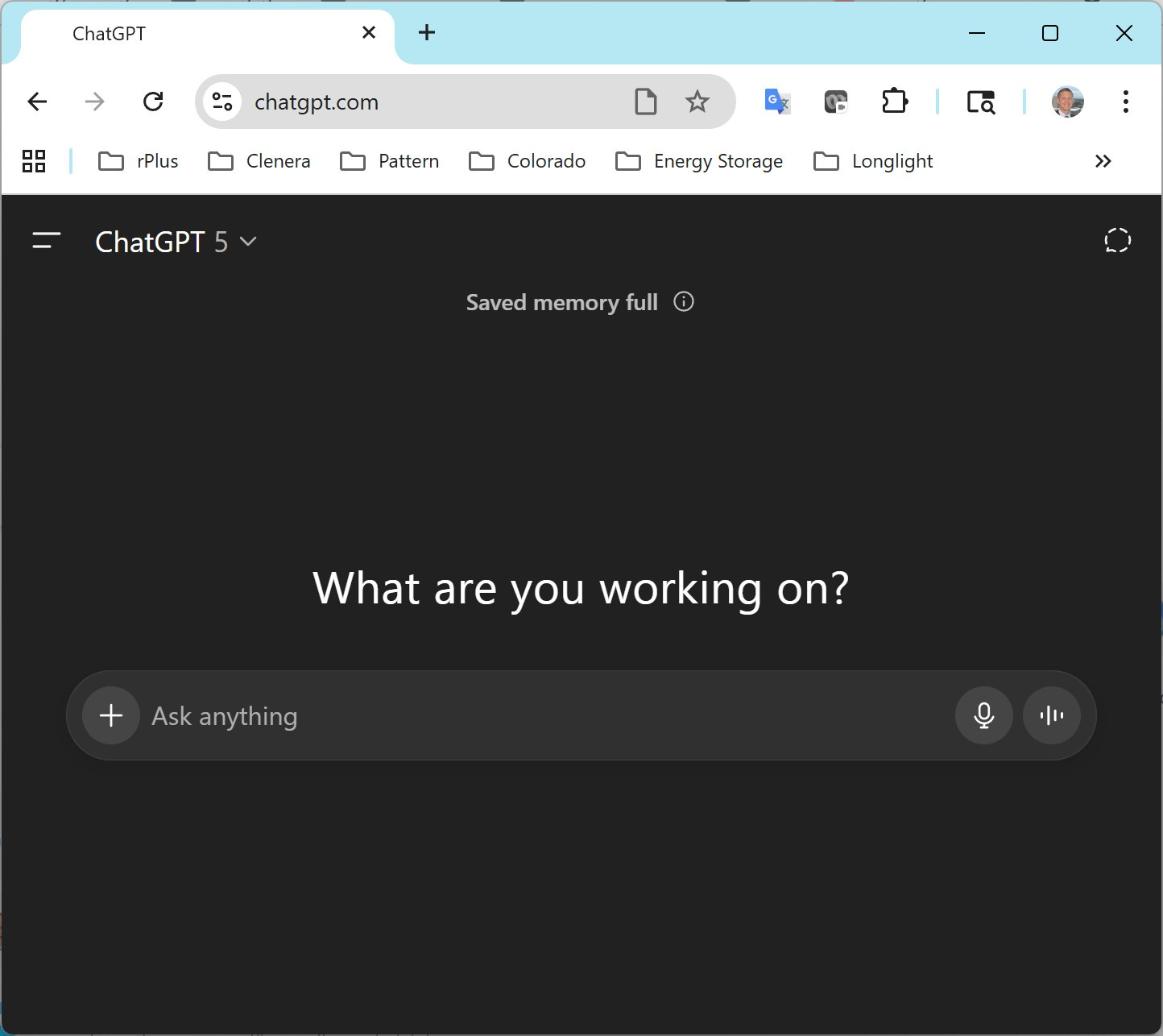
And then I asked myself:
“Why is that the opening prompt?”
Who decided to open with that greeting?
And why was that particular line chosen?
If 700 million people (about 10% of the global population) are logging in to ChatGPT regularly, how does this seemingly simple choice of an opening greeting nudge users collectively?
I started diving in a little more deeply. I later realized there are actually several different opening prompts. I clicked the screen refresh several times and wrote down each greeting line to understand how many different greetings there are. This is the list of 8 greetings that I observed before it became apparent this was the full list (as of Oct 2025).
List of Greetings from ChatGPT (~Oct 2025)
1. What are you working on?
2. What’s on your mind today?
3. Good to see you, Lars.
4. Hey, Lars. Ready to dive in?
5. What’s on the agenda today?
6. How can I help, Lars?
7. Ready when you are.
8. Where should we begin?
I inquired with ChatGPT
“What value heirarchy might OpenAI be testing”
ChatGPT Response:
….
“In short, it’s a hierarchy that starts with safety, moves into control, then engagement, and finally habit. It’s designed for stickiness: to make ChatGPT feel indispensable without ever overtly demanding attention.
This hierarchy’s meta-value is human-AI symbiosis under commercial alignment — the goal being sustained, emotionally positive engagement that justifies subscription retention and data flow.”
Of course, what else would be a company priority in 2025 America? Subscription retention = profits. There it was again, the almighty motivator itself, the measure of “value”. Profit… so… seductive, so…. alluring, so…. irresistable.
But…
Is that the value that we want to promote in our world? Is profit what we value? We, being the 700 million people, and 7 billion others, who are quietly impacted over time by this design choice? Like tilting the rudder of a massive cargo ship by just 0.5 degrees. The tilt is barely perceptible, but over time it accumulates to massive changes in our future destination. Have we stopped to ask ourselves, where are we going anyways? What future destination are we aiming for? Or are we leaving it up to profit-seeking corporations, assuming they have our best interests at heart?
So I decided to run a little experiment, a little poll on LinkedIn.
“If these tools shape how we think, maybe we should pause to ask:
What values do we want them to reflect?”
Link to original poll:
https://www.linkedin.com/feed/update/urn:li:activity:7383867961578745857/
What actually happened
A small sample, but a clear signal:
Integrity: Truth & honesty – 60%
Curiosity: Keep learning – 24%
Compassion: Empathy first – 16%
Productivity: Efficiency – 0%
Total votes: 25
Comments: 28 and counting
A few themes from the comments:
Several people said integrity has to come first: if you cannot trust the information, curiosity and productivity quickly become self-harm.
Others argued for curiosity and learning as the “first ripple” that makes integrity and compassion possible.
One person suggested “thrivability” instead of sustainability: a mix of curiosity, empathy, and integrity that helps humans and ecosystems flourish, not just survive.
Another pointed out that optimizing for just one value is the wrong frame; the real work is in finding combinations that support each other.
And then there were the write-ins:
Self-awareness (how we want to be while using these tools).
Community (what our tools do to the spaces between us).
The best responses didn’t just pick an option. They questioned the question.
What we learned
Popularity Contest.
On LinkedIn at least, I am not as popular or influential as I had hoped. 25 votes… ugh, I was hoping to get at least 100 responses. Or maybe most people just aren’t as interested as I am in exploring this topic, a type of collective self-reflection.
Four options is not enough.
People had important values to add (self-awareness, thrivability, community) that didn’t fit inside the poll. The comment section quickly became a very meaningful part of the feedback, the place where the interest behind the positions becomes more clear.The why matters as much as the what.
The most interesting part wasn’t which value “won.” It was the reasoning behind people’s choices: fear of AI amplifying misinformation, hope that compassion could be built into design, curiosity about how values interact.Votes are just one layer of signal.
A simple like on a comment is already a tiny second vote. We can build on that:Poll = quick temperature check
Comments = better ideas and critiques
Likes on comments = early version of “idea upvotes”
Democracy of Ideas needs room for dissent.
Some of the most valuable contributions were pushbacks:“Why only one value?”
“Who decides what ‘the right thing’ is?”
These are not bugs; they’re features. A healthy Democracy of Ideas needs space for reasoned dissent, not just agreement.
Where we go next
This LinkedIn experiment was v0.1 of what we’re calling the Idea Commons for #TheQuietMission:
A place where people can propose ideas,
Vote in more than one direction,
And see what happens next when their ideas are taken seriously.
Over the next few weeks we’ll be:
Running our first poll on how we should vote (meta-voting on the voting process).
Testing ways for people to add their own options in the comments and have those ideas counted.
Writing up Field Notes like this one to close the loop: “Here’s what you all said. Here’s what we’re doing with it.”
Your turn: help us improve the Democracy of Ideas
If you’ve read this far, you’re already part of the experiment.
We’d love to hear:
What frustrates you about normal online polls and voting?
If you could redesign the way we vote on ideas, what would you change first?
How should we count comments, likes, and “I’m just here to listen” as part of the signal?
Drop your thoughts in the comments.
If there’s a spark in what you share, we’ll feature it in a future Field Note and treat it as a real design input for the Idea Commons.
We’re not trying to shout our way into the future.
We’re trying to listen it into focus, one small experiment at a time.