


GDP was built for war.
Born in the 1930s under Simon Kuznets, it was a tool of mobilization, a way to count steel, wheat, and munitions in an age when survival meant production.
It measured output so that governments could plan for conflict and later for recovery.
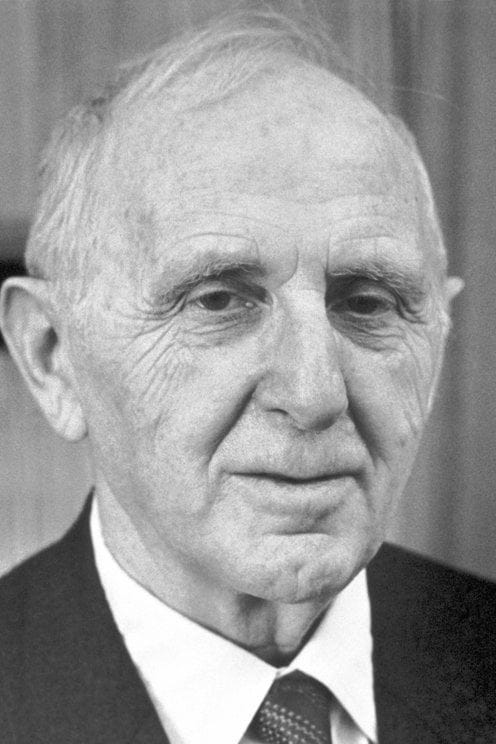
But as decades passed, that wartime instrument became a peacetime compass.
We began to equate growth with good and every upward tick with success.
The number became a ritual, a quarterly pulse of civilization’s heartbeat.
The problem is not that GDP is wrong.
It is that we have mistaken movement for meaning.
It tells us how fast money changes hands, not whether it is building the future or borrowing against it.
As Robert F. Kennedy warned in 1968:
‘The gross [domestic] product does not allow for the health of our children, the quality of their education or the joy of their play. It does not include the beauty of our poetry or the strength of our marriages, the intelligence of our public debate or the integrity of our public officials.”
(Source: https://www.stlouisfed.org/publications/page-one-economics/2013/05/01/gdp-does-it-measure-up)
A $1,200 ambulance ride boosts GDP.
So does the crash that caused it.
Rebuilding after a hurricane adds billions to growth even as it signals climate failure.
A billion spent on illness prevention and a billion on pollution cleanup both glow the same on the charts.
To GDP, harm and healing are indistinguishable as long as someone pays.
It is like judging a body’s health by its heart rate while ignoring the internal bleeding.
How We Learned to Reward Harm
When every dollar of expenditure counts as progress, the system learns to reward damage that demands repair.
Entire industries grow around avoidable dysfunction: pharmaceutical empires for preventable disease, energy subsidies for depletion, data centers for distraction.
The economy expands, but the human condition contracts.
The United States spends about $546 billion each year simply complying with tax rules (Tax Foundation, 2022, https://taxfoundation.org/data/all/federal/irs-tax-compliance-costs/).
It has become a self-licking ice-cream cone of bureaucracy, a system built mainly to feed itself while pretending to nourish the economy.
GDP counts this as growth, but it is really friction mistaken for function.
When friction increases, we celebrate it as success. That is the definition of a moral hazard.
Kuznets himself warned that “the welfare of a nation can scarcely be inferred from a measure of national income” (U.S. Congress Document #124, 1934, https://fraser.stlouisfed.org/files/docs/publications/natincome_1934/19340104_nationalinc.pdf).
We built the opposite anyway.
And yet, the deeper problem is not malice. It is momentum.
We kept the metric long after we outgrew its meaning.
The Fracture Between Capacity and Wellbeing
GDP measures capacity, the throughput of a machine.
It does not measure wellbeing, the experience of being alive within it.
We have built vast material capacity atop fragile psychological ground.
Anxiety and loneliness rise in step with productivity.
The faster the system runs, the more invisible the cost becomes.
Other nations have tried new compasses:
Bhutan’s Gross National Happiness measures balance between material and spiritual wellbeing.
The UN’s Human Development Index tracks education and health.
The Genuine Progress Indicator subtracts social and ecological costs from economic gains.
None have replaced GDP, but together they whisper: growth for what?
Belief, Value, and the Architecture of Trust
Money itself is a story we agree to believe.
A one-dollar bill and a hundred-dollar bill differ only by collective faith.
That faith, trust in the shared fiction, is the scaffolding of exchange.
When trust erodes, economies suffocate.
Corruption, polarization, and misinformation act as economic toxins.
They corrode the invisible infrastructure that makes exchange possible.
GDP can soar in a country where trust collapses, until suddenly it cannot.
When belief falters, no graph can disguise the fracture.
Perhaps the true reserve currency is not the dollar or the yuan, but trust itself.
Without it, even abundance feels brittle.
The True Value Ratio: From Extraction to Contribution
At Longlight, we have begun experimenting with a different lens:
Instead of focusing mainly on profit that flows INTO a company (value extraction), we prioritize value that flows OUT of a company (value creation).
True Value = value created for others
True Value Ratio = value created for others ÷ value captured for ourselves
We call it the True Value Ratio (TVR), a compass for direction rather than magnitude.
A company that earns one dollar while creating ten for others has a TVR of 10.
One that extracts ten while giving one has a TVR of 0.1.
Neither number tells the whole story, but the ratio reveals a trajectory.
It shows whether a system is expansive or cannibalistic, whether growth compounds outward or collapses inward.
TVR does not replace GDP; it illuminates what GDP cannot see.
GDP tells us how fast the current flows.
TVR tells us where it is headed.
The Next Economy: Trust as Infrastructure
If collective belief built the old order, better belief can build the next.
Economies are not machines; they are moral ecosystems.
When they reward extraction, trust decays.
When they reward contribution, trust grows - and with it, resilience.
The future of economics may depend less on price signals than on trust signals, measurable flows of mutual benefit.
Imagine balance sheets that account not only for revenue and cost, but for trust gained or lost in each transaction.
A company that earns less but erodes nothing may be richer in the long run.
The Gentle Eclipse of GDP
GDP will not disappear.
It will fade into context, one instrument among many, useful for counting motion but not for defining meaning.
Its purpose will narrow as our awareness widens.
Progress will be measured not only by what we build, but by what we restore, by how much light our actions leave behind.
Quiet Close
“The health of a civilization is not found in how fast money moves,
but in how much life it carries as it moves.”
🧭 Run this post through the Forge (link below)
What part of this argument would you test first, GDP’s limits or TVR’s promise?
Please share your reflections or dissent in the comments!

I took the bait and discussed this with TruthForge through several iterations. A sample of the responses:
Optimization assumes:
* stable variables
* predictable curves
* linear improvements
* tidy feedback loops
But life operates more like weather patterns: complex, interacting forces, micro-chaos, feedback delays, and emergent behavior.
Trying to smooth life into a “steady geometric curve” is like trying to prune a wild hedge into a perfect sphere—it might look impressive, but it’s not how the hedge wants to grow.
Which brings us back to measurement: When you design metrics to fit a curve, you force the world to distort around that curve.
Life leaks. Resources drift. Energy dissipates. And managing that seepage requires judgment, not rigid control.
This is exactly the kind of perspective macro-measures often miss.
It was enough for me to create a log-in so I can explore with other topics.